
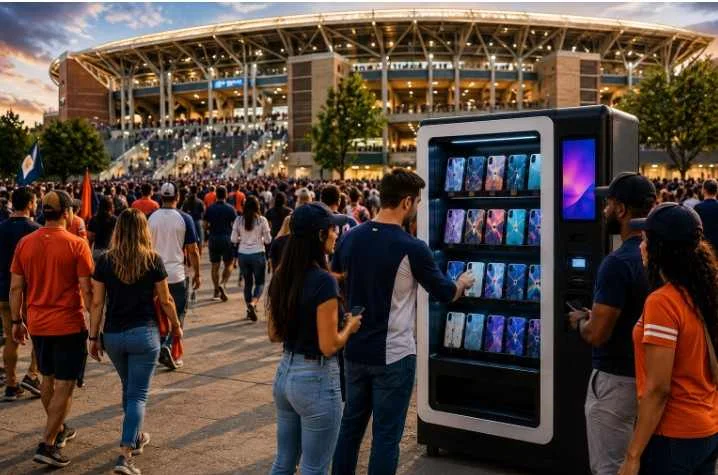
Anyone who has walked through a stadium parking lot a few hours before kickoff knows what real foot traffic looks like. Tailgates fill up early, lines form outside gates long before doors open, and thousands of fans move through concourses in waves throughout the day. For small business owners, this kind of concentrated crowd is not just a spectacle, it is one of the most valuable windows of opportunity available anywhere.
Game day traffic has quietly become a testing ground for vending style businesses, and one option that fits naturally into this environment is a vending machine for sale positioned near stadium entrances or tailgate zones.
Why Game Day Crowds Are Different From Everyday Foot Traffic
Most retail businesses rely on steady, spread out traffic across an entire week. Game days work differently. A single event can bring in tens of thousands of people within just a few hours, all converging on one location at roughly the same time. This creates a short, intense window where demand spikes far beyond what a typical retail day would see, and businesses that are set up to capture that spike can generate outsized returns compared to a slow, steady week elsewhere.
Fans arriving for a game are also in a different mindset than a typical shopper. They are excited, often traveling with friends or family, and generally more open to spending on small extras that add to the overall experience of the day.
Why Vending Machines Suit This Environment So Well
Setting up a full retail stand for a single game day does not make financial sense for most small business owners, given the cost of staffing and inventory management for just a few hours of operation. A vending machine solves this problem by requiring far less oversight. Once positioned in a good spot, whether near a gate, a tailgate lot, or a concourse walkway, it can operate with minimal supervision throughout the event, handling transactions and dispensing product without needing a full team on site.
This lower overhead is what makes vending style setups particularly attractive for game day specific businesses, since the return on a single event can be strong even without the fixed costs of running a full retail operation.
Understanding the Type of Buyer at a Stadium Event
Sports fans attending a game are often looking for ways to show their support beyond just wearing a jersey. Personalised or team themed merchandise appeals strongly in this setting because it lets fans carry that connection with them well after the game ends. A phone case featuring a team colour scheme or a player’s number becomes something fans want in the moment, especially during high stakes matchups or rivalry games where excitement runs highest.
This kind of impulse purchase behaviour is exactly what makes stadium foot traffic valuable. Fans are not comparison shopping the way they might elsewhere, they are making quick decisions based on excitement and the moment they are in.
Where to Position a Machine for Best Results
Placement within the stadium footprint has a major impact on performance. High visibility areas near main entry gates tend to capture attention before fans settle into the stadium for the game. Tailgate zones, where fans spend hours before kickoff, offer a longer window of engagement compared to a quick walk through a gate. Concourse areas inside the stadium can also work well, particularly during halftime when foot traffic picks up again as fans move around for food or restrooms.
Negotiating placement usually involves working directly with stadium management or event organisers, and agreements can range from a flat fee for the day to a revenue share arrangement depending on the venue’s policies.
Planning Around a Limited but High Value Window
Unlike a permanent retail location, a stadium vending setup usually operates around a specific schedule tied to game days rather than continuous daily operation. This requires different planning. Owners need to account for setup and breakdown time, ensure enough stock is available to handle the concentrated demand of a single event, and have a clear plan for restocking during longer events like playoff weekends with back to back games.
Because the window is short but the traffic volume is high, having enough inventory on hand matters more here than in a typical retail setting where restocking during slower hours is usually straightforward.
Scaling Beyond a Single Stadium
Once a vending setup proves successful at one venue, expanding to multiple stadiums or events becomes a logical next step. Some owners build a rotating schedule across different games throughout a season, or scale into other high traffic sporting events entirely. This flexibility is one of the underrated advantages of a vending based model, since the same machine and product can move between locations depending on where the biggest crowds are on a given weekend.
Final Thoughts
Game day foot traffic represents a concentrated, high value opportunity that few other retail settings can match. For small business owners willing to work around a stadium’s schedule rather than a typical daily routine, a vending machine offers a practical way to tap into that traffic without the overhead of a full retail setup. As sports events continue drawing massive crowds week after week, this kind of targeted, event based business model is likely to keep growing among small vendors looking for high impact opportunities.